

# NGO Documentation and Compliance: A Complete Guide for NGOs in India
Non-Governmental Organizations (NGOs) play an important role in education, healthcare, women’s empowerment, environmental protection, rural development, and social welfare. Proper documentation and regulatory compliance help NGOs operate transparently, maintain public trust, and explore opportunities for grants, CSR funding, and donations.
At **All India NGO Welfare Union**, we aim to help NGOs, charitable trusts, societies, and Section 8 companies understand their documentation requirements and strengthen their organizational operations.
## 1. NGO Registration and Legal Documentation
The first step in establishing an NGO is selecting a suitable legal structure based on its objectives and proposed activities. Depending on the circumstances, an organization may register as a public charitable trust, society, or Section 8 company.
Essential documents may include:
– Trust deed, memorandum of association, or incorporation documents
– Rules and regulations or articles of association
– PAN application and organizational identity documents
– Address proof and registered office documents
– Details and identity documents of trustees, members, or directors
– Board resolutions and authorization letters, where applicable
Proper preparation of these documents helps establish the organization’s legal identity and governance framework.
## 2. Tax Registrations and Statutory Compliance
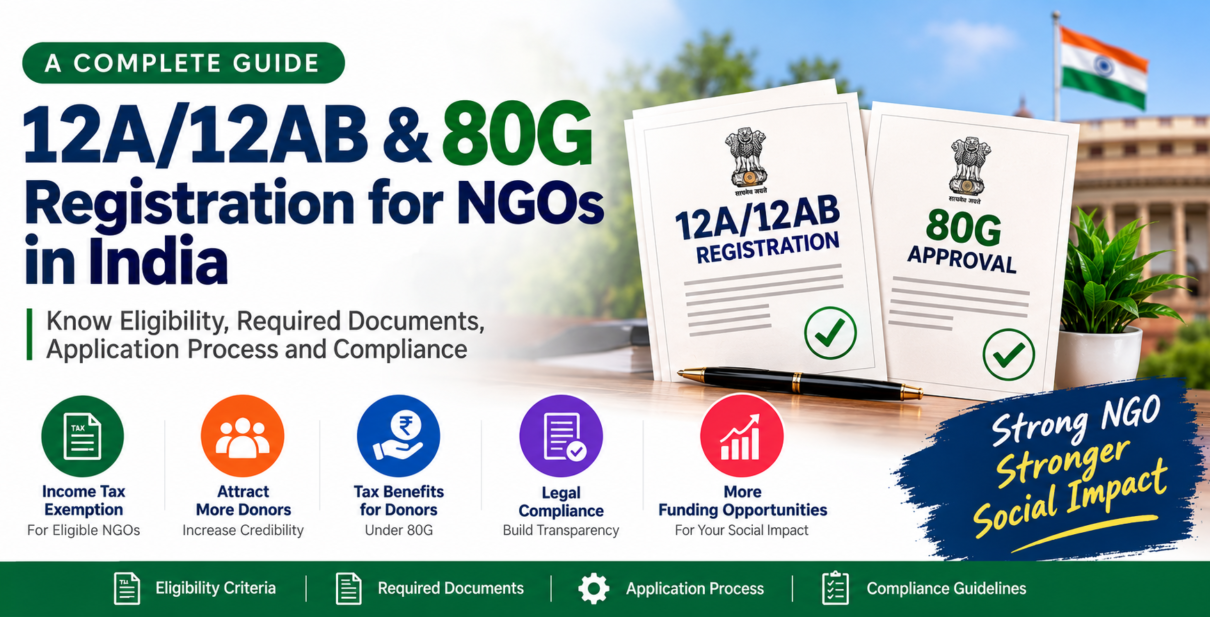
Eligible NGOs may need registrations or approvals relating to income-tax exemptions and donor deductions. Requirements depend on the organization’s structure, activities, and applicable law.
Important areas include:
– **12A/12AB-related registration:** Guidance on income-tax exemption registration, as applicable.
– **80G approval:** Assistance with approval requirements relevant to eligible donor deductions.
– **NGO Darpan:** Registration and profile maintenance for eligible nonprofit organizations. The NGO Darpan ID is required for certain government grants and other specified processes.
– **CSR-1:** Registration requirements for eligible entities intending to undertake CSR activities as implementing agencies.
– **FCRA:** Guidance for organizations seeking to receive foreign contributions, subject to applicable registration or prior-permission requirements.
Organizations should verify current forms, eligibility criteria, deadlines, and supporting documents before submitting applications.
## 3. Accounting, Audit, and Annual Filings
Maintaining accurate financial records is essential for transparency and responsible fund management. NGOs should maintain proper records of donations, grants, expenditure, project activities, and assets.
Depending on their legal structure and applicable requirements, organizations may need:
– Books of accounts and financial statements
– Donation receipts and supporting vouchers
– Bank statements and grant utilization records
– Audit reports, where required
– Income-tax returns and other statutory filings
– Annual returns and governance records
– Utilization certificates and project expenditure statements
Regular financial reviews can help organizations identify gaps early and prepare for donor assessments or regulatory inquiries.
## 4. Project Reports and CSR Funding Documentation
NGOs seeking corporate social responsibility (CSR) support should prepare clear, realistic, and measurable project proposals.
A professional project report generally includes:
– Organization profile and registration details
– Project background, objectives, and needs assessment
– Target beneficiaries and geographical coverage
– Detailed budget and proposed funding requirement
– Implementation timeline and activities
– Expected outcomes and measurable indicators
– Monitoring, evaluation, and reporting plans
– Supporting certificates, financial records, and previous project details
CSR funding is not guaranteed by preparing a project report. Organizations must meet the applicable eligibility requirements, and each funding company may have its own evaluation process.
## 5. Donation and Fundraising Documentation
Strong documentation can help donors understand an NGO’s purpose, activities, financial needs, and use of funds.
NGOs should consider preparing:
– Organization profile and impact report
– Project proposals and fundraising appeals
– Donation receipts and donor records
– Bank details and applicable tax approval documents
– Photographs and evidence of project activities, with appropriate consent
– Budget estimates and expenditure reports
– Progress updates and fund utilization reports
Transparent communication and accurate records can strengthen donor confidence and support long-term fundraising efforts.
## 6. How All India NGO Welfare Union Can Help
All India NGO Welfare Union provides guidance and support for organizations seeking to improve their documentation and administrative processes.
Our service areas include:
– Trust, society, and Section 8 company registration guidance
– NGO documentation and compliance assistance
– 12A/12AB, 80G, CSR-1, and NGO Darpan support
– FCRA-related procedural guidance
– Project report and budget preparation
– CSR proposal development and fundraising guidance
– Accounting, audit, and filing coordination
– NGO capacity-building and organizational development
Our objective is to make essential NGO-related guidance more accessible so that organizations can focus on delivering meaningful social services.
## Conclusion
Effective documentation and compliance are important foundations for a transparent, accountable, and sustainable NGO. By maintaining accurate records, understanding applicable regulations, and preparing professional project proposals, organizations can strengthen their operations and become better prepared to explore funding opportunities.
**All India NGO Welfare Union — Empowering NGOs Through Documentation, Compliance, and Fundraising Guidance.**
**Contact us** to discuss your organization’s documentation requirements and identify the support appropriate to your needs.