

# CSR Funding for NGOs in India: Eligibility, Documents, and How to Apply
Corporate Social Responsibility (CSR) funding is an important opportunity for eligible nonprofit organizations in India to implement projects that benefit communities. Companies undertake CSR activities in accordance with applicable provisions of the Companies Act, 2013, and may support projects in areas such as education, healthcare, environmental sustainability, skill development, rural development, and women’s empowerment.
For NGOs seeking financial support, understanding CSR eligibility, preparing a professional project proposal, and approaching suitable companies are important steps toward building funding partnerships.
**All India NGO Welfare Union** provides guidance to NGOs on CSR documentation, project report preparation, compliance requirements, and fundraising opportunities.
## 1. What Is CSR Funding?
CSR funding refers to financial or other eligible support provided by companies for activities covered by applicable CSR laws and rules.
Companies may support projects involving:
– Education and scholarships
– Healthcare and medical camps
– Women’s empowerment
– Skill development and employment
– Environmental protection
– Rural development
– Child welfare and community development
– Support for disadvantaged communities
NGOs should identify projects that align with both the applicable CSR framework and the funding company’s priorities.
## 2. Who Is Eligible to Receive CSR Funding?
Not every NGO automatically qualifies to receive CSR funds as an implementing agency.
Depending on the organization’s legal structure and circumstances, eligibility may require:
– Registration as a qualifying public charitable trust, registered society, or Section 8 company
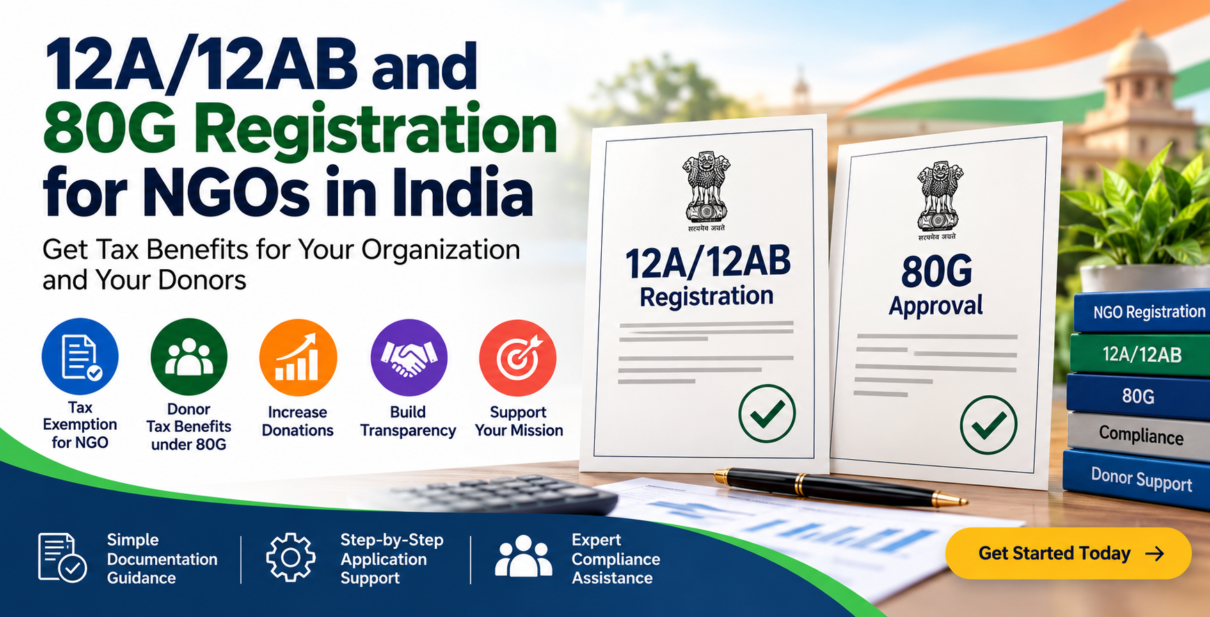
– Applicable income-tax registrations or approvals, including 12A/12AB and 80G, where required
– CSR-1 registration with the Ministry of Corporate Affairs, where applicable
– Compliance with relevant eligibility conditions, including the prescribed track-record requirement where applicable
– Proper governance, accounting, and project implementation arrangements
Some categories of implementing agencies have different eligibility conditions. NGOs should verify the current CSR rules and their specific eligibility before applying.
## 3. Documents Required for a CSR Proposal
Companies commonly request supporting documents to assess an NGO and its proposed project.
These may include:
1. NGO registration certificate
2. PAN and organizational profile
3. Trust deed, memorandum, or governing documents
4. Applicable 12A/12AB and 80G certificates or approvals
5. CSR-1 registration details, where required
6. Audited financial statements and annual reports
7. Detailed Project Report (DPR)
8. Project budget and implementation schedule
9. Details of trustees, directors, or governing members
10. Previous project records and evidence of work
11. Bank details and other documents requested during due diligence
The exact requirements depend on the company, project, and applicable regulations.
## 4. How to Prepare a Professional CSR Project Report
A well-structured Detailed Project Report helps a company understand the project’s purpose, cost, implementation plan, and expected outcomes.
A professional CSR proposal should include:
– Executive summary
– NGO background and experience
– Problem statement and needs assessment
– Project objectives
– Target beneficiaries and geographical coverage
– Activities and implementation timeline
– Detailed budget allocation
– Expected outcomes and impact indicators
– Monitoring and evaluation plan
– Sustainability strategy
– Supporting documents and organizational credentials
Budgets should be realistic, clearly explained, and supported by appropriate estimates. The project should also identify how progress and expenditure will be reported.
## 5. How to Find Suitable CSR Companies
NGOs should research companies whose CSR priorities match their proposed projects.
Useful steps include:
– Review corporate CSR policies and annual reports.
– Identify companies supporting similar social causes.
– Find official CSR contact details or application procedures.
– Check eligibility criteria and proposal submission windows.
– Prepare a tailored proposal for each prospective funder.
– Follow up professionally and respond to due-diligence requests.
Companies may publish CSR policies and reports on their official websites. The Ministry of Corporate Affairs also provides information about CSR provisions and disclosures.
## 6. Common Reasons CSR Proposals Are Not Selected
A proposal may not progress when it has unclear objectives, unrealistic budgets, incomplete documentation, weak implementation plans, or insufficient evidence of organizational capacity.
Other reasons include a mismatch with the company’s CSR priorities, eligibility issues, limited funding availability, and competition from other projects.
NGOs can improve their preparedness by maintaining current records, developing measurable project plans, and ensuring that every claim in